Cable Car Museum
The free powerhouse that pulls every cable car
⏱ 30-60 minutes👤 All agesFree
Get Tickets
Get Cable Car Museum Tickets
Skip the line · mobile tickets accepted at the door
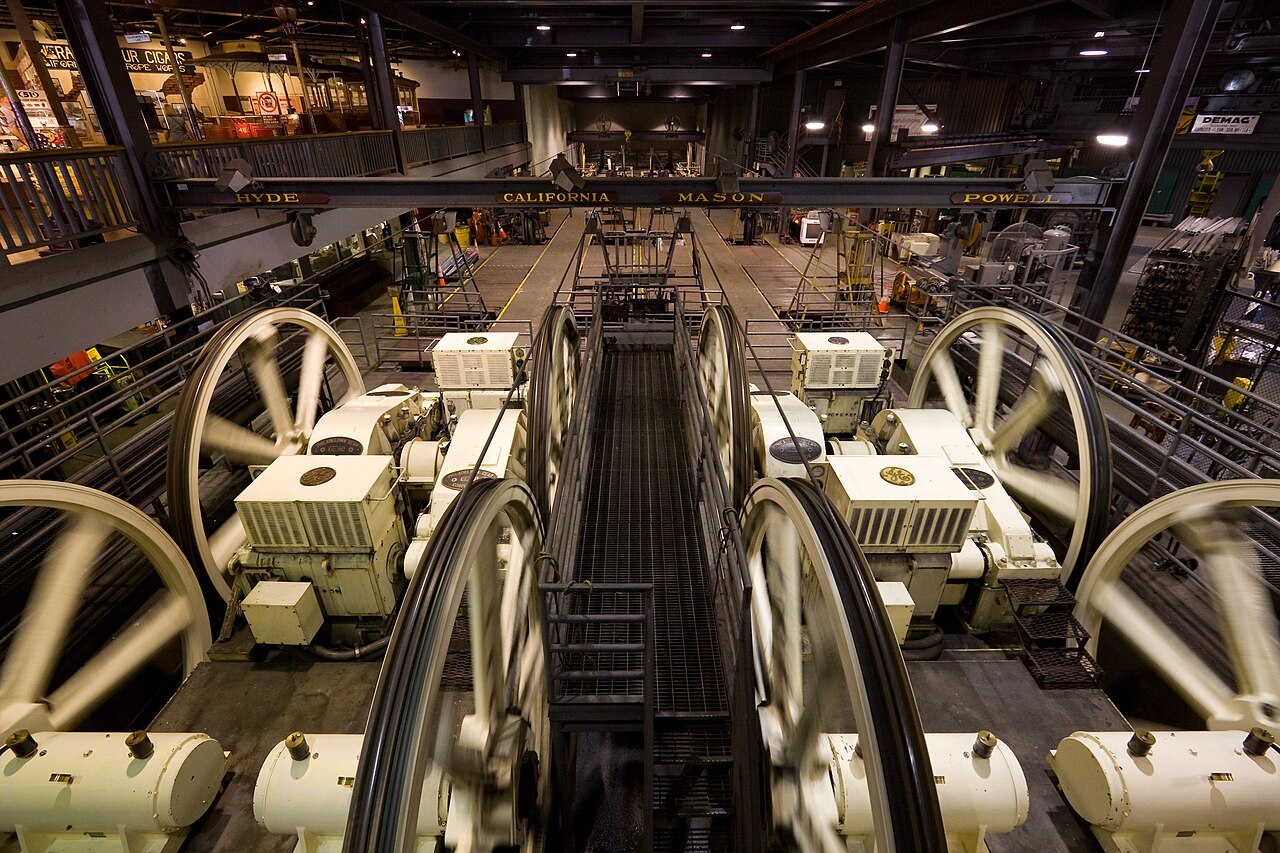
How do cable cars work? Unlike streetcars, the cars have no engines. Instead, a gripman on each car uses a lever to grab a continuously moving cable that runs in a slot under the street, and lets go to stop. The cables are pulled by the machinery in this building, so the museum shows you the source of the motion. A video overview of the system plays regularly in one of the galleries, and signs explain the mechanics in plain language.
The museum is a good way to understand why the cable cars still run. San Francisco's system is the last manually operated one in the world, and it dates back to 1873, when Andrew Hallidie's first line began carrying passengers up steep Clay Street. The exhibits include some of the earliest surviving equipment and cars, and the collection helps put the daily rides in context. The gift shop is a handy stop for books and souvenirs about the system.
Opening hours are straightforward. From April 1 to September 30, the museum is open from 10 a.m. to 6 p.m., and from October 1 to March 31 it is open from 10 a.m. to 5 p.m. It is open every day except Thanksgiving, Christmas Day and New Year's Day. Areas may close without notice during essential work in the winter months, so expect that parts of the view may sometimes be limited. The address is 1201 Mason Street.
A visit takes about thirty to sixty minutes. It pairs naturally with a cable car ride on the Powell-Mason or California Street line, with Grace Cathedral and the Fairmont a few blocks away, and with Chinatown downhill. It is especially good in the morning before the lines for the cable car stops grow, and on a foggy day when you need an indoor break. Because admission is free, it is one of the best value stops in the city for families.
Use the museum as a companion to your ride. Visit first and you will notice the grip, the bell and the cable slot on the street with new understanding; visit after and you can match the machinery to what you felt on the hill. Stand near the viewing windows to watch the wheels, because the best views are at the front. The museum is small and can be crowded in peak season, so go early in the day, and allow a few extra minutes for the gift shop, which sells books and small mementos.
What to Expect
Format
A free museum inside the working cable car powerhouse, with a viewing gallery of the winding wheels, vintage cars and a short video on how the system works.
Best Time
Morning visits are quieter; it is a good indoor stop on foggy days.
Duration
About thirty to sixty minutes.
Tips
Open daily except Thanksgiving, Christmas and New Year's Day; hours are slightly shorter from October to March.
⚡ Quick Picks
Best For
Curious riders and families who want to see how the cable cars work.
Families
Kids like watching the giant wheels turn.
Couples
A quick, free and surprising stop on a Nob Hill stroll.
Pair With
A cable car ride, Grace Cathedral and the Fairmont.
Time Needed
About thirty to sixty minutes.
Ready to book Cable Car Museum?
Get Tickets →Frequently Asked Questions
Is the Cable Car Museum free?
Yes, admission is free.
Where is it?
At 1201 Mason Street at Washington, on Nob Hill.
What are the hours?
April to September, 10 a.m. to 6 p.m.; October to March, 10 a.m. to 5 p.m.; closed Thanksgiving, Christmas and New Year's Day.
What can I see?
The working winding machinery, vintage cars, photographs and a video overview of the system.
How do cable cars work?
A gripman grabs a continuously moving cable under the street, which is pulled by the machinery in this building.
More San Francisco Attractions
Browse all →
San Francisco Cable Car Ride
Ride the last manually operated cable cars on earth — a moving national landmark running since 1873, clanging up and down San Francisco's steepest hills with open-air sides and unbeatable views.

Coit Tower
The Art Deco tower crowning Telegraph Hill — Depression-era WPA murals around its base and a 210-foot elevator ride to a 360-degree observation deck with sweeping views of the bay, the bridges, and the city.

Chinatown Walking Tour
A guided walk through the oldest Chinatown in North America — the Dragon Gate, temples, markets, hidden alleys, and the fortune cookie factory, with the food and history that make it one of the city's most vivid neighborhoods.